A Global Insight with a Local Reality
When we read about Google’s legendary perks — gourmet cafeterias, flexible work schedules, outdoor workspaces, and vibrant employee events — it’s tempting to see these as Silicon Valley extravagances. But there’s a deeper truth behind the hype:
Robust employee benefits drive engagement, productivity, and profitability.
Studies show that companies with highly engaged employees experience:
- 23% higher profitability
- 18% higher productivity
- 12% stronger customer satisfaction scores
In India, where talent markets are tightening and workforce expectations are evolving fast, this connection between benefits and engagement is more relevant than ever. Employees are not just looking for a job; they’re looking for value, security, and growth — and they’re willing to switch if they don’t find it.
The Evolution of Employee Expectations
The definition of “good benefits” has shifted dramatically over the last decade.
Not long ago, provident fund, gratuity, and annual leave were considered generous. But today’s Indian workforce — driven by millennials, Gen Z, and a rapidly growing gig economy — has different priorities. They value flexibility, wellness, and financial empowerment just as much as (if not more than) basic pay. 7 in 10 (69%) Indian Gen Z employees plan to switch jobs in the next six months.
Here’s what’s topping the list:
- Flexible work options: hybrid setups, adjustable shifts, remote work possibilities
- Health & wellness programmes: insurance, fitness perks, mental health support
- Financial wellness tools: earned wage access, budgeting help, low-cost credit
- Skill development opportunities: upskilling, certifications, learning pathways
- Mental health & holistic wellbeing: counselling, wellness days, peer support
And the clincher?
76% of surveyed employees would be willing to sacrifice existing benefits for a better choice of benefits.
This is a wake-up call for employers still relying on outdated benefit models. Today’s employees understand that true compensation goes beyond monthly pay — it includes financial stability, growth opportunities, and a sense of being genuinely cared for.
The Science Behind Security and Commitment
Employee commitment for India’s massive blue-collar and gig workforce is not primarily driven by workplace culture, but by economic stability and social protection. In a landscape where financial stress, family obligations, and lack of a social safety net weigh heavily, providing meaningful benefits is the decisive factor for a worker to feel truly supported and secure.
Research on this segment confirms that platforms and employers who offer health insurance, transparent earnings models, and access to upskilling see higher worker commitment and reduced churn. Fundamentally, for India’s frontline workers, engagement is directly proportional to the security an employer provides against the financial volatility of their lives.
The Four Pillars of Modern Employee Benefits in India
Let’s break down the four areas where leading Indian companies are innovating — and where many still lag behind
Flexible Work Arrangements
The pandemic permanently changed the way Indians think about work. For white-collar employees, hybrid and remote work became mainstream. For blue-collar and gig workers, flexible shifts and platform-based autonomy are now key drivers of job satisfaction.
Companies that offer genuine flexibility report higher retention and better morale, especially in congested urban centres where commutes are long and tiring.
Career Development Opportunities
A growing number of Indian workers want growth, not just a paycheck. They actively seek employers who offer learning paths, skill certifications, or upskilling support.
From IT firms offering coding bootcamps to logistics platforms enabling driver entrepreneurship, this investment signals:
“We care about your future, not just your present.”
The payoff? Stronger loyalty, lower attrition, and a more capable workforce.
Health & Wellness Programmes
Healthcare costs in India are rising sharply, and employees are acutely aware of the risks.
Leading companies are offering:
- Comprehensive medical insurance for families
- Preventive health checkups
- Fitness partnerships with gyms and apps
- Mental health support, including counselling and therapy subsidies
This isn’t just CSR — it’s smart business. Healthy employees take fewer sick days, perform better, and are more likely to stay.
Financial Wellness Solutions
This is where Indian employers have the most room for impact.
Only 14% of Indian employees feel they are “thriving,” while 86% are “struggling” or “suffering.” For blue-collar workers, it can be devastating: a single unexpected expense can derail an entire month’s budget.
Forward-thinking employers are stepping in with solutions like:
- Earned Wage Access (EWA): Allowing employees to withdraw a portion of their earned wages before payday.
- Financial literacy & counselling: Professional help to manage debt and savings.
- Budgeting tools & credit access: Tech-enabled solutions to reduce reliance on informal lenders.
Financial Wellness as a Competitive Advantage
At KarmaLife, we’ve witnessed how financial wellness benefits can completely reshape workplace culture, particularly in India’s gig and frontline workforce.
The beauty of solutions like KarmaLife lies in their ease of integration. Companies can offer these benefits without changing payroll structures or straining working capital — while giving workers the financial flexibility they deeply value.
Building a Benefits Package That Works
Creating an impactful benefits strategy isn’t about copying what others do. It’s about understanding your workforce’s unique needs and designing benefits that drive both engagement and ROI.
Here’s where to start:
- Prioritise financial wellness — it’s the bedrock of employee peace of mind.
- Offer genuine flexibility in work hours, shifts, and location.
- Invest in learning and development to signal long-term commitment.
- Support holistic wellbeing, including mental and physical health.
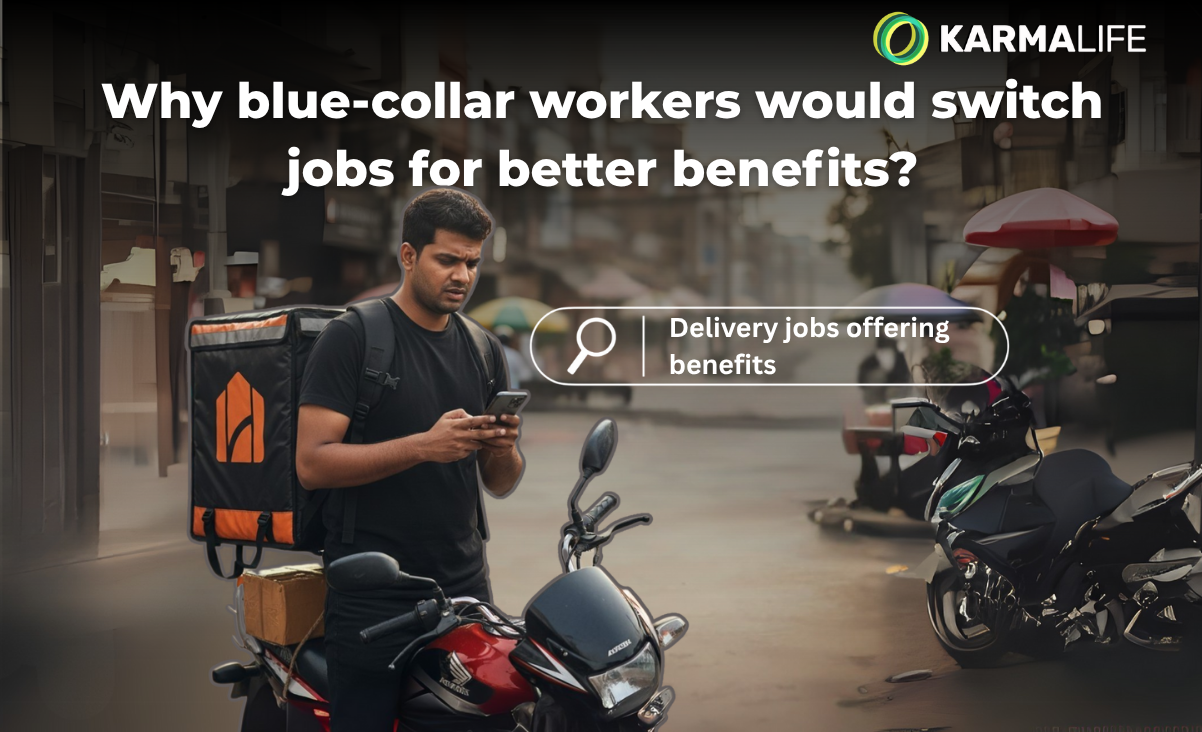
Remember: in a market where 79% of employees are willing to switch jobs for better benefits, the question is no longer “Can we afford to do this?” — it’s “Can we afford not to?”
Employee benefits are no longer a support function; they’re a strategic growth lever. In India’s competitive talent landscape — from urban offices to gig platforms — companies that understand this don’t just attract better talent.
They build loyal, productive, and proud workforces.
By reimagining benefits with financial wellness at the centre, Indian employers can transform engagement, retention, and business outcomes — and KarmaLife is proud to be driving this change.