Union Budget 2023: Empowering India’s Gig Workers through Fintech innovation

nirmala sitharaman
Finance Minister Nirmala Sitharaman holds up a folder with the Government of India’s logo as she leaves her office to present the Union Budget 2023 in the parliament, in New Delhi, February 1, 2023. Photo: REUTERS/Adnan Abidi
The Union Budget 2023 presents an opportunity for fintech companies to serve India’s growing gig economy.

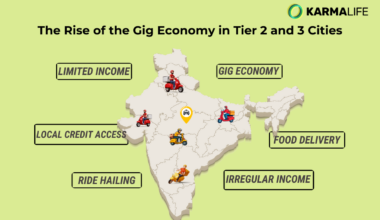
According to a NITI Aayog report, by 2029-30, gig workers are estimated to make up 4.1% of India’s total workforce, a significant rise from the current 1.5%. This growth highlights a growing imperative to address the financial needs of the gig economy. 

One of the key themes in the Union Budget 2023 is the government’s focus on the growth of the fintech sector. The combination of available digital infrastructure and the  growing gig workforce has created an unprecedented opportunity to provide financial services and strengthen livelihoods for  a fast emerging underserved segment. This particularly excites us at KarmaLife as the fintech-gig economy ecosystem that we are trying to build can align the needs of gig workers, their employment platforms, and financial institutions  by establishing sustainable access to financial services such as savings, liquidity, and insurance, which are altogether essential for financial stability. We are also motivated by  the huge market to serve and large, rapidly-growing customer base. But for all of this to happen, we need the Government to help create an enabling regulatory environment for companies like ours to operate in. The current Government’s plans to launch a comprehensive policy for the digital payment sector is surely a step forward. 

The government has also announced that it will be setting up a central repository of the collection of all financial data, which will then enable fintech companies to provide more customized and relevant financial services to the gig/blue collar workers. 

In addition to the fintech sector, the government has also announced measures to support the gig economy, such as the creation of a national employment policy that will provide social security benefits to gig/blue collar workers. This policy is a significant step in the right direction  and will help strengthen the financial resilience of gig workers.

To sum up, the Union Budget 2023 presents a great opportunity for fintech companies to serve the growing gig economy in India. With support measures for both the fintech sector and the gig economy, this ecosystem has the potential to bring financial stability to gig workers and provide fintech companies with the opportunity to serve a large market


0 Shares:
Leave a Reply

Your email address will not be published. Required fields are marked *

You May Also Like
Financial wellness for workers
Read More

Safe Credit for Workers: What Employers Should Know

KarmaLife empowers employers to provide gig workers with safe credit solutions, such as Earned Wage Access, offering financial flexibility and reducing stress. Our compliance-focused, secure services not only benefit your employees but also enhance your reputation as an employer who cares about financial well-being.
Early salary for my employees
Read More

10 Benefits of Early Salary Payments for Gig Workers

Early salary payments are revolutionizing the gig economy, providing gig workers with financial control and peace of mind. In this insightful article, we explore the top 10 benefits of this transformative approach, from reducing financial stress to fostering stability and empowerment in the lives of gig workers.
5 income schemes better than FD
Read More

5 Government Schemes Better Than Fixed Deposits

In India’s fast-growing digital economy, more people are joining the gig workforce than ever before. From delivery partners and cab drivers to freelancers and part-time tutors, gig workers play a crucial role in the country’s economy. Yet, many of them remain outside the formal financial system and lack the tools or knowledge to secure their financial future.
Read More

Time to Review and Analyze Your Employee Offerings

“Time to review and analyze your employee offerings”—not just a suggestion, but a call to action for every forward-thinking employer. In today’s dynamic work environment, traditional pay cycles are no longer enough. Employees—especially in the gig and blue-collar sectors—are demanding more flexibility, financial security, and real-time access to earnings. This blog dives into why Earned Wage Access (EWA) is emerging as a game-changing benefit, and how offering it can dramatically improve productivity, retention, and employee satisfaction. If you're serious about staying competitive and building a resilient workforce, it’s time to rethink how you pay.
Read More

Financial Wellness Programs for Workers: A Path to Security

As financial wellness becomes a cornerstone of employee benefits, programs featuring short-term credit and Earned Wage Access are gaining traction, offering a lifeline in times of need. These innovative solutions foster financial stability, allowing workers to manage unforeseen expenses without falling into debt. Through these initiatives, employers are investing in the holistic well-being of their workforce, enhancing both satisfaction and engagement. The future of work hinges on such comprehensive support systems, ensuring a financially secure and empowered workforce.